
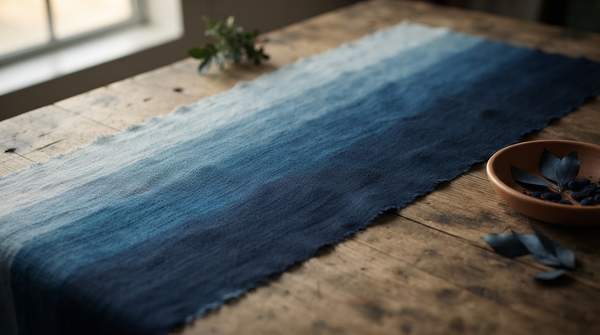
There is no automatically greener dye. The real choice for brands and designers is a trade-off: natural dyes offer renewable, biodegradable sourcing but struggle with fastness, shade reproducibility, and scale, while low-impact synthetic dyes deliver durability and consistency with a reduced—but not eliminated—environmental footprint. Neither category wins on every criterion, and the responsible sourcing decision depends on which of those failures your product can tolerate. This guide compares the two dominant sustainable dye categories across consistent criteria and shows how certification signals can anchor your claims.
Understanding Sustainable Dye Options: Natural vs. Low-Impact Synthetic
Sustainable dyeing today is largely a two-way comparison. Natural dyes are extracted from renewable plant, animal, or mineral sources, using safer solvents such as water or ethanol rather than harsh petrochemicals, as described in a sustainable fashion industry guide. Their appeal is intuitive: renewable inputs, biodegradable chemistry, and a lower likelihood of skin irritation for sensitive consumers.
Low-impact synthetic dyes occupy the middle ground. They are engineered to use less water and energy during dyeing and to reduce the environmental footprint of the process, while retaining the performance characteristics that made conventional synthetics the industry default. A key distinction matters here: conventional synthetic dyes carry a high effluent load and toxic discharge, and it is the eco-certified subset—not synthetics as a class—that offers reduced toxicity and controlled discharge. Treating all synthetic dyes as equivalent would misstate the category.
The scientific literature is candid about why natural dyes remain niche. A review of advancements in sustainable natural dyes concluded that poor fastness properties, low affinity with textile substrates, and difficulties reproducing shades still prevent larger-scale industry adoption, despite promising new techniques. That finding frames the rest of this comparison.
Environmental Footprint: Water Use, Toxicity, and Renewability
On renewability, natural dyes start with a clear advantage. They come from renewable sources, do not contain toxic chemicals, and are biodegradable, which reduces the environmental impact of textile production and lowers water pollution relative to conventional dyeing. For brands whose sustainability story centers on renewable inputs and end-of-life biodegradability, this is the strongest natural-dye claim available.
But the advantage is conditional. Natural dyeing typically relies on mordants to fix color to the fiber, and mordants can include heavy metals—chemistry that can negate some of the environmental benefits of the dye itself. A dye sourced from plants but fixed with a metal salt is not automatically benign, and the mordant choice deserves as much scrutiny as the dye.
Low-impact synthetics invert the equation. Their upstream footprint is heavier—synthetic dye production is tied to petroleum extraction and chemical synthesis—but the dyeing stage is designed for reduced water and energy consumption, lower toxicity, and improved biodegradability. Eco-certified synthetic dyes add controlled discharge to that profile. The honest comparison is therefore stage-specific: natural dyes win at the source, while certified synthetics can win at the effluent pipe, depending on the specific chemistry and application.
Performance Characteristics: Colorfastness and Palette
Performance is where the trade-off bites hardest. Natural dyes exhibit lower fastness and a limited color palette, and they often require mordants to improve durability and color fixation. The scientific review reinforces this from the research side: poor fastness and low affinity for textile substrates are persistent, documented limitations, not marketing folklore. For a garment expected to survive repeated washing, this is a genuine product-risk factor.
Shade reproducibility compounds the problem. Difficulties reproducing shades consistently are among the factors keeping natural dyes out of larger-scale production, which matters for any brand running repeat seasonal colorways or matching dye lots across suppliers.
Low-impact synthetic dyes offer a balance: good fastness and a growing palette, according to the eco-friendly dye guide, approaching the excellent fastness and wide palette of conventional synthetics without their toxic discharge profile. The caveat is formulation-specific—actual fastness and color range depend on the particular dye chemistry, so a category-level promise is not a substitute for testing the specific product. For durable applications, the guide is blunt: dyes that fade after three washes will not serve streetwear or other hard-wearing categories, and this is where eco-certified synthetics hold the practical edge.
Scalability and Cost Implications for Production
Natural dyes are generally higher in cost and less scalable for mass production, driven largely by the consistency challenges already described. The scientific review lists cost-effectiveness considerations among the factors preventing wider industry adoption. This is not a marginal premium on an otherwise industrial-ready process; it reflects real constraints in supply, extraction, and shade control.
Eco-certified synthetic dyes sit at a moderate cost point—between conventional synthetics at the low end and natural dyes at the high end—and provide a more scalable solution. That positioning makes them the pragmatic default for brands producing at volume while still wanting a defensible environmental claim.
One boundary deserves emphasis: no source quantifies a specific cost premium for sustainable dyes over conventional ones. Prices vary widely by supplier, volume, and application, so any percentage figure a vendor quotes should be treated as a supplier-specific quote, not an industry benchmark. Request pricing against your actual fabric, shade depth, and run length rather than accepting category averages.
Sustainable Dye Sourcing Decision Matrix
The matrix below evaluates both dye types against the same four criteria, so you can read across a row to see where each option is strong and where it fails. The pattern it reveals: natural dyes excel at renewability but face challenges in fastness, consistency, and scalability, while low-impact synthetics balance performance against a reduced environmental footprint—making each suited to different brand priorities.
| Dye Type | Environmental Impact | Performance (Colorfastness & Palette) | Scalability & Cost |
|---|---|---|---|
| Natural dyes | Renewable sources, biodegradable, low water pollution; but mordants can include heavy metals that may negate some benefits | Lower fastness, limited palette; shade reproducibility is unreliable; mordants needed for fixation | Higher cost; consistency challenges limit mass-production scalability |
| Low-impact synthetic dyes | Designed for reduced water and energy use, lower toxicity, improved biodegradability; eco-certified versions offer controlled discharge; heavier upstream footprint from petroleum-based synthesis | Good fastness and a growing palette; specific performance depends on the dye formulation | Moderate cost; more scalable than natural dyes; no quantified premium over conventional dyes available |
Read the table as a decision tool, not a scorecard. If your priority is renewable sourcing and biodegradability for a small-batch or artisan product where some shade variation is acceptable, the natural-dye row supports that choice. If your priority is durable, repeatable color at production volume, the low-impact synthetic row is the evidence-supported path—provided you verify the specific formulation's fastness rather than trusting the category.
Verifying Claims: The Certification Layer
Because neither category is automatically greener, third-party certification is what separates a defensible claim from greenwashing. The eco-friendly dye guide's bottom line is explicit: look for certified options that balance performance, safety, and environmental impact, because the best choice depends on specific dye chemistry, application method, and brand transparency. "Eco-certified" synthetic dyes, in particular, are defined by reduced toxicity and controlled discharge—claims that certification bodies are positioned to verify and that a supplier's self-description cannot.
Practically, that means asking any dye supplier two questions: which certification covers this specific dye, and what does that standard actually test for—input chemistry, effluent, or finished-goods safety? A certification that covers only one stage does not validate claims about the others.
Making Your Sustainable Dye Choice
Brands and designers should select between natural and low-impact synthetic dyes based on a careful evaluation of their specific priorities regarding environmental impact, required performance—especially colorfastness—and production scalability needs. The evidence supports a clear split: natural dyes for renewable-input stories where shade variation is tolerable and volumes are small; certified low-impact synthetics for durable, repeatable color at scale.
Before committing a production run, test the decision against something measurable: the chosen dye type's performance against internal quality control metrics (e.g., wash fastness, color consistency) and compliance with relevant third-party certifications (e.g., GOTS, OEKO-TEX). A sample run that passes your wash-fastness threshold and carries verifiable certification is the point where the sourcing choice stops being a values statement and becomes a specification you can ship.