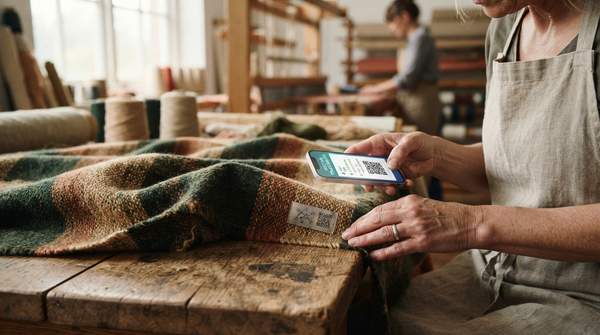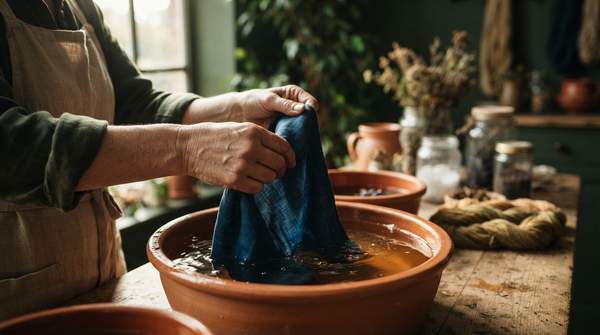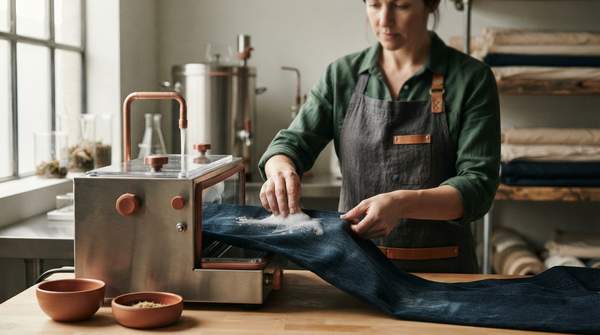

Three classes of enzymes now do work in textile mills that was once done with hot water, alkalis and abrasive stone: amylases strip starch from woven cotton, pectinases prepare fibers for dyeing, and cellulases smooth fabric surfaces. Each enzyme targets one specific molecule, which is exactly why they displace broad, aggressive chemical treatments. The trade is straightforward: less water, less energy and fewer hazardous chemicals in the wastewater stream, in exchange for enzymes that cost more and can be less stable in industrial conditions.
Introduction to Enzymes in Textile Processing
Why would a mill hand a biological molecule a job once reserved for boiling alkali? Because enzymes are selective. A review of enzymatic technology in the wet stages of textile production notes that enzymes can modify fiber structure, degrade gums, remove natural pigments, dye fibers and soften finished textiles, all while consuming less energy and provoking less environmental impact than the conventional chemical route.
The stakes are real. Textile wet processing—desizing, scouring, bleaching, dyeing, printing and finishing—has historically relied on water-intensive methods, and that dependency carries significant environmental consequences, chiefly the discharge of large volumes of contaminated wastewater. Industry literature on enzymes as a climate-mitigation approach frames the same problem: the textile sector faces water pollution and greenhouse-gas emissions that enzymatic processes can help address.
Amylases for Desizing: Breaking Down Starch
Before yarn can be woven, it is usually coated with starch-based sizing agents to strengthen it. Once weaving is done, that starch has to come off, or it will block dye uptake. This removal is desizing, and the modern tool for it is alpha-amylase.
How does it work? Amylases are starch-splitting enzymes: they cleave the starch molecules applied during sizing into smaller fragments that wash away. According to the Enzyme Technical Association, a trade body representing enzyme manufacturers and distributors in the Americas, alpha-amylases have replaced harsh chemicals in desizing because of their high efficiency and minimal harmful effects on the fabric itself. That last point matters—the enzyme attacks the starch and leaves the cotton fiber alone, something a nonspecific chemical bath cannot promise.
Pectinases for Bioscouring: Natural Fiber Preparation
Scouring is the cleanup step. Raw cotton carries non-cellulosic impurities—waxes and pectins among them—that make the fiber water-repellent and hard to dye evenly. Conventional scouring attacks these with harsh alkaline treatments, which are water-intensive and contribute to polluted effluent.
Pectinases offer a narrower route. They hydrolyze pectin, one of the main impurities, which removes the unwanted material and improves the wettability of cotton fibers. The biology is well characterized: pectinases come in several forms, including pectin esterases, which remove the methoxyl residue from pectin, and depolymerizing pectinases and protopectinases, which convert water-insoluble protopectin into soluble pectin. Once soluble, the pectin simply leaves with the wash water. A chapter on pectinase in the textile industry reports that enzymatic bio-preparation and bioscouring reduce water and energy consumption, minimize environmental impact and improve product quality compared with traditional chemical methods.
Cellulases for Biopolishing: Enhancing Fabric Smoothness
Finished fabric often wears tiny protruding fibers that make the surface fuzzy and prone to pilling. Biopolishing with cellulase removes those protruding fibers, leaving a smoother, cleaner fabric face. The same enzyme class does the famous denim work: cellulase is used for bio-stoning of denim in place of traditional stonewashing, per the Enzyme Technical Association.
There is a boundary worth knowing. Because cellulase acts on cellulose—the cotton fiber itself—its action must be controlled; the enzyme removes surface fuzz rather than degrading the whole fabric. ScienceDirect's overview of biofinishing lists enzymatic desizing, biopolishing, bioscouring and biobleaching as established enzymatic treatments, and credits enzyme treatment with safety and low energy consumption.
Enzymatic vs. Traditional Textile Processing: A Comparative Overview
The table below matches each enzymatic treatment to the chemical method it replaces and the environmental gain it delivers. Read it as a substitution map: for every traditional stage, there is a specific enzyme doing one precise job.
| Textile Process | Enzyme Class Used | Biochemical Action | Traditional Chemical Method | Key Environmental Benefit |
|---|---|---|---|---|
| Desizing | Amylases (alpha-amylases) | Split starch-based sizing agents into removable fragments | Harsh chemical desizing | High efficiency with minimal harm to fabric; replaces harsh chemicals |
| Bioscouring | Pectinases | Hydrolyze pectin, removing non-cellulosic impurities and improving wettability | Harsh alkaline scouring | Reduced water and energy consumption; less contaminated effluent |
| Biopolishing / bio-stoning | Cellulases | Remove protruding surface fibers for smoother fabric | Traditional stonewashing of denim | Low energy consumption and safer processing |
The pattern across all three rows is the same: an enzyme performs a targeted hydrolysis that a bulk chemical bath once performed indiscriminately, and the effluent leaving the mill is correspondingly cleaner.
Environmental Benefits of Enzymatic Textile Processing
Across every stage surveyed, the environmental case rests on three recurring gains: lower water use, lower energy use and the elimination of hazardous chemicals from the wastewater stream. The enzymatic route consumes less energy and provokes less environmental impact than conventional chemical processes, according to the review of biotechnology in textile wet processing. Enzymatic desizing, bioscouring and biopolishing together offer eco-friendly alternatives to traditional chemical methods, as a climate-focused treatment of the subject puts it.
Honesty requires the other column too. ScienceDirect's overview names the main hurdles for industrial implementation of enzymes: low stability, low compatibility with other chemical agents, longer processing time and relatively high cost. Enzymes are not a free upgrade; they are a trade of capital and process control for water, energy and effluent savings.
Adopting Sustainable Textile Practices
For a textile manufacturer weighing the switch, the decision is whether to adopt enzymatic processes for desizing, bioscouring and biopolishing to enhance sustainability. The evidence supports that adoption where the three core stages are concerned: each enzymatic route has a documented chemical counterpart and a documented environmental advantage over it.
The measurable indicator to watch is a reduction in water consumption, energy usage and chemical effluent in processing facilities. Those are the quantities the enzymatic literature claims and the quantities a mill can track directly—before and after a switch, per stage, in its own wastewater discharge and utility bills.
Sources
- Sciencedirect: Three classes of enzymes
- Enzymes in Textile Processing: A Climate Changes Mitigation Approach — Springerprofessional
- MDPI
- Reducing Chemicals in Textile Processing — Enzyme Technical Association | ETA is a trade association of companies that represents manufacturers, sellers and distributors of enzyme products in North, Central, and South America.
- Sciencedirect: ScienceDirect's overview of biofinishing