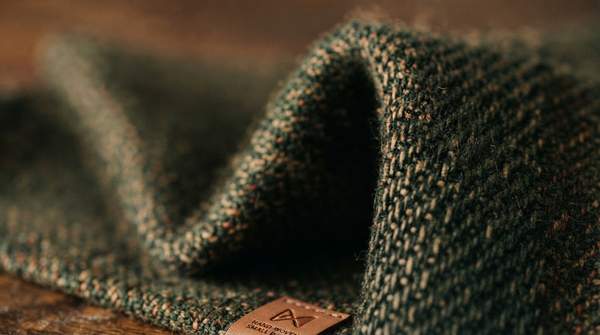

The most reliable way to judge a textile product's sustainability claims is to look for a named third-party certification on the label. Two of the most prominent are OEKO-TEX Standard 100, which certifies that a textile has been tested for harmful substances from yarn to finished product, and the Global Organic Textile Standard (GOTS), which verifies organic fiber sourcing and responsible production across the supply chain. These labels matter because they convert a brand's marketing language into independently checked claims—a practical defense against greenwashing, where environmental promises outrun the evidence.
Navigating Greenwashing: The Need for Textile Certifications
Consumer pressure is reshaping the textile industry. Industry reporting on consumer behavior notes that today's shoppers increasingly want to know where their clothes come from, how they are made, and what impact they have, and that brands respond directly to this demand because consumer preferences drive sales and loyalty. That demand has pushed many brands to adopt sustainable materials, reduce waste, and improve supply-chain transparency.
The same dynamic creates an incentive to overstate. When sustainability becomes a selling point, vague claims—"eco-friendly," "conscious," "natural"—cost little to print and can be difficult for a shopper to verify. This is the space where greenwashing thrives: the claim is environmental, but the proof is absent. The consumer's problem is not a shortage of concern but a shortage of verifiable information at the moment of purchase.
How Third-Party Certifications Verify Sustainability Claims
Third-party certifications work by inserting an independent check between what a brand says and what a shopper buys. Writing on consumer behavior in sustainable fashion, Textile School argues that knowledge and transparency are pivotal in shaping purchasing decisions: consumers who understand the environmental and social impacts of textiles are more likely to support sustainable brands. The same analysis identifies certifications such as GOTS and OEKO-TEX as providing "credible proof of eco-friendly and ethical practices, building consumer trust."
The mechanism is straightforward. A brand's self-declared claim carries only its own word. A certification label carries the word of an external body that has tested the product or audited the process against a published standard. The label functions as a shorthand signal: instead of researching a company's entire supply chain, the shopper checks whether a recognized, named standard has been applied and met.
Key Textile Certifications for Consumers
Two certifications dominate the evidence on consumer-facing textile verification, and they cover different ground. OEKO-TEX Standard 100 is a product-safety label: according to OEKO-TEX itself, it is "a label for textiles tested for harmful substances" that "sets the benchmark for textile safety, from yarn to finished product," with every item bearing the label certified as having passed safety tests for harmful substances. GOTS, by contrast, is a supply-chain standard: it ensures that a brand is sourcing genuine organic fibers and operating responsibly throughout its supply chain, as retailer Delilah Home explains in its comparison of the two labels.
Because the two standards answer different questions—one about the chemistry of what you touch, the other about the integrity of how it was made—they are not interchangeable. A comparison by ECQA Global Inspection, an inspection firm, notes that many manufacturers obtain both certifications to cover different aspects of sustainability and safety, and that dual certification strengthens a brand's credibility. Apparel-industry commentary similarly observes that stacking certifications is common practice among certified facilities.
OEKO-TEX Standard 100: Ensuring Product Safety
OEKO-TEX Standard 100 addresses a specific, concrete question: does this product contain harmful chemicals? The certifying body describes the label as applying to textiles tested for harmful substances, covering every component of the product from yarn to finished item. Each item bearing the label has passed safety tests for the presence of such substances.
For the shopper, the practical value is direct skin-contact assurance. The standard verifies the chemistry of the finished product—the towel, the sheet, the garment as sold—rather than the ethics or origin of its production. ECQA's assessment calls it a globally respected certification for product safety, effective for verifying that textiles are free from harmful substances regardless of fiber type or sourcing. That breadth is its strength: it applies whether the textile is cotton, synthetic, or blended.
Global Organic Textile Standard (GOTS): Organic and Ethical Production
GOTS answers a different question: was this product genuinely made from organic fibers, responsibly, by people treated fairly? According to Delilah Home's explanation, GOTS certification ensures a brand is sourcing genuine organic fibers and operating responsibly throughout its supply chain, covering organic sourcing, responsible manufacturing, and fair labor. Where OEKO-TEX examines the end product's chemistry, GOTS audits the chain of custody from raw material to finished good.
The two certifications are therefore complementary rather than competing. Delilah Home frames the combination as covering "the full picture: organic sourcing, responsible manufacturing, fair labor, and a finished product verified to be safe for your skin and your family." A GOTS label tells you about origins and process; an OEKO-TEX label tells you about the finished article's chemical safety. Neither alone guarantees everything, which is why dual-certified products send a stronger signal than either label alone.
The Certification Trust Model: From Claim to Confidence
The relationship between these elements can be mapped as a four-stage model that turns the abstract problem of greenwashing into a concrete purchasing check.
| Stage | What happens | Example |
|---|---|---|
| 1. Consumer concern | The shopper cares about a specific risk—harmful substances against skin, or environmental and labor impacts. | Worried about chemical residues in bedding, or pesticide use in cotton. |
| 2. Brand claim | The brand asserts sustainability in marketing. Without verification, this is where greenwashing can occur. | "Eco-friendly," "organic-feel," "clean cotton" on a hangtag. |
| 3. Third-party verification | An independent body tests or audits against a published standard and grants a named label. | OEKO-TEX Standard 100 tests for harmful substances; GOTS audits organic integrity and supply-chain responsibility. |
| 4. Verified trust | The label converts the promise into a checkable signal, enabling purchase confidence. | A STANDARD 100 mark or GOTS label on the product. |
Read the model as a diagnostic: if a product's marketing makes stage-two claims but stage three is missing, the claim rests solely on the brand's word. If a named certification is present, the claim has passed an external check whose scope you can identify—chemical safety for OEKO-TEX Standard 100, organic and ethical production for GOTS. The model's key insight is that certifications do not make a product sustainable; they make a specific, defined claim verifiable, which is precisely what unsubstantiated marketing lacks.
Your Guide to Credible Sustainable Textile Choices
When purchasing textile products, actively look for and identify specific third-party sustainability certifications like OEKO-TEX Standard 100 or GOTS on product labels. Treat the label as the measurable indicator: the presence of a recognized certification label on a textile product indicates verified adherence to specific environmental or human-ecological standards. Check which standard appears and match it to your concern—OEKO-TEX Standard 100 for the chemical safety of the finished product, GOTS for organic fibers and responsible production across the supply chain, and both together for the broadest verified picture. A hangtag full of adjectives with no named label is the signal to keep asking questions.
Sources
- OEKO-TEX® STANDARD 100 — OEKO TEX
- GOTS Certified vs. OEKO-TEX: What's the Difference and Why It Matters — Delilah Home
- Consumer Behavior in Sustainable Fashion: Drivers and Challenges — Textile School
- GOTS vs Oeko-Tex: Textile Certification Differences — ECQA Global Inspection