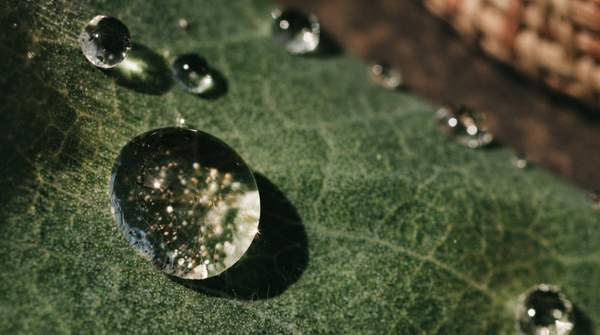
Biomimicry—learning from and mimicking strategies found in nature—has become a genuine engine of innovation in textile design. Two examples show the process at its clearest: the lotus leaf, whose surface chemistry and structure keep it clean without effort, and spider silk, a protein filament that spiders produce under ordinary ambient conditions while achieving an exceptional combination of strength and toughness. For home textiles such as upholstery, carpets, and outdoor gear, these natural models translate into stain repellency, self-cleaning behavior, and greater durability. This article walks through each example using a simple three-part model: natural inspiration, underlying principle, textile application.
Biomimicry in Textiles: Nature's Design Blueprint
Before diving into the individual examples, it helps to have a repeatable framework you can apply to any biomimetic textile claim you encounter. The path always runs in one direction: from an observed natural feature, to the physical principle that makes it work, to the functional benefit engineered into the fabric. Trace each step, and you can judge whether a "nature-inspired" product label reflects real science or just marketing.
| Subject | Natural Inspiration | Underlying Principle | Textile Application & Benefit |
|---|---|---|---|
| Lotus Leaf | The leaf repels water so remarkably that the phenomenon carries its name: the "Lotus Effect." | Micro- and nanoscale structures on the leaf's surface cause water to bead up and roll off, carrying dirt away with it. | The same principle is used in stain-repellent coatings, producing self-cleaning fabric surfaces for everyday wear. |
| Spider Silk | Spider silks are protein-based biopolymer filaments, produced by spiders under ambient conditions. | They possess an exceptional combination of strength and toughness, making them a model engineering material. | Mimicking spider silk points toward textiles with superior strength and durability, enhancing performance in demanding uses such as upholstery and outdoor gear. |
Notice what the framework demands: a specific structure or material property in the organism, a mechanism that explains it, and a measurable benefit in the finished fabric. If any link is missing, the biomimicry claim is incomplete.