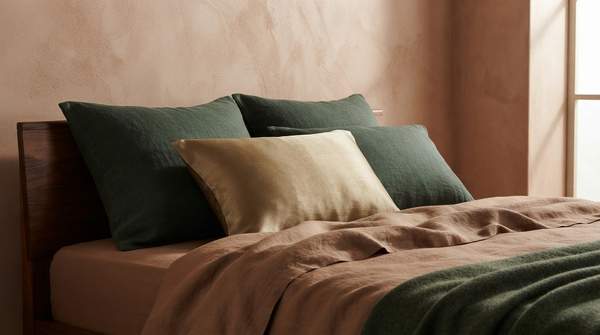
If your goal is less hair breakage and better overnight moisture, silk is the strongest choice: it is a natural protein fiber with very low surface friction and minimal moisture absorption. Polyester satin offers a smoother surface than cotton at a lower price, but it lacks silk's protein structure and can trap heat against your skin. Cotton, a natural plant fiber, creates the most friction and pulls the most moisture from hair and skin. Understanding why each material behaves this way is the difference between guessing and choosing.
Understanding Pillowcase Materials: Fiber vs. Weave
Before comparing materials, you need one key distinction: silk is a fiber, while satin is a weave. As Blissy's editors explain, silk describes a natural fiber, whereas satin describes a weave structure that can be made from several different materials. A "satin pillowcase" is almost always woven from polyester or another synthetic — Moonchild's buying guide puts it plainly: satin can feel smooth but is almost always a weave of polyester or other synthetics.
Why does this matter so much? Because two fabrics can feel equally smooth in your hand yet behave very differently overnight. The smoothness of a satin weave comes from how the threads are arranged on the loom; the benefits of silk come from what the thread itself is made of. A weave is a surface treatment of sorts. A fiber is a substance. When you buy satin, you are buying a texture. When you buy silk, you are buying a material with a specific chemistry.
This distinction is the most common shopping mistake in the category. A polyester satin pillowcase and a mulberry silk pillowcase can both slide under your palm in a store. But only one of them carries the protein structure that drives silk's moisture behavior. Confusing the two means paying for — or missing — properties the fabric never had.
Silk: The Natural Protein Fiber for Hair and Skin
Silk is a natural protein-based fiber produced from silkworm cocoons. That protein structure is what sets it apart from every other option on the shelf. Silk retailers such as Gingerlily note that silk's protein structure is compatible with the amino acids in hair fiber, which supports the hair's ability to retain its own moisture overnight — a difference that is most noticeable for dry, coarse, or chemically treated hair, where overnight moisture loss is a significant factor.
The research organization TRI Princeton adds scientific grounding to the marketing claims. Silk fibers are smooth and non-irritating, and evidence suggests silk may help avoid friction-based damage to hair and skin. On friction, silk's coefficient against hair is lower than cotton's — meaning strands glide rather than catch as you shift positions in your sleep.
Moisture tells a similar story. Both cotton and silk are naturally hydrophilic, so both absorb some water. But a study by Otomasu and co-workers on sweat evaporation from clothing, cited by TRI Princeton, found that cotton absorbs more water than silk and transmits it through the fabric more quickly. Less absorption means more of your hair's natural oils and your skin's hydration stay where you put them, rather than wicking into the pillowcase. Mulberry Park Silks' comparison adds that silk's amino acids condition hair as it moves across the surface, and that silk does not absorb skincare products applied before bed.